
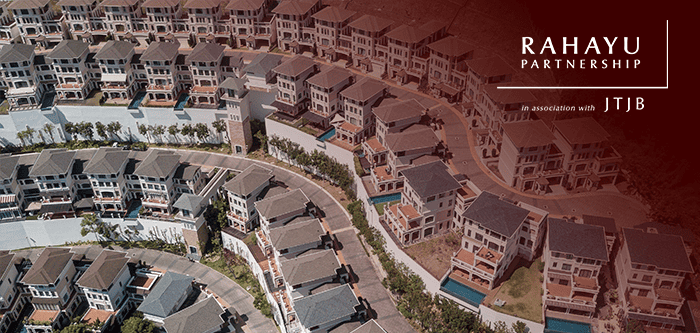
Not a Downturn — A Reset of Risk: What the Middle East Conflict Means for Malaysia’s Property Marketc
Executive Summary
The ongoing Middle East conflict is widely viewed as a macroeconomic concern.
However, a closer analysis suggests something more immediate and commercially relevant: this is not a demand shock — it is a cost-driven reshaping of contractual risk across the property sector.
Recent market commentary indicates that the primary impact is rising energy, construction, and logistics costs, rather than a collapse in demand.
While formal dispute data is still developing, these cost pressures typically translate—based on industry experience—into increased claims relating to variations, delay, and cost recovery.
These risks are not theoretical — they are already beginning to surface in ongoing projects where input costs have shifted materially since contract execution.
For developers, financiers, and investors, the consequence is clear: projects will be tested not by whether they sell, but whether they can be executed on current terms.
1. The Shift from Market Risk to Contract Risk
Historically, property cycles are driven by demand fluctuations.
The present environment is different.
Rising input costs are placing pressure on:
- Contractor margins
- Project timelines
- Financing assumptions
Legal consequence:
There is an increased likelihood of:
- Variation claims
- Extension of time (EOT) claims
- Disputes over cost pass-through mechanisms
Projects that were commercially viable at contracting stage may now become contested at execution stage.
2. Where the Stress Will Surface
A. Construction & EPC Contracts
The most immediate vulnerability lies in fixed-price or poorly structured construction contracts.
Key pressure points:
- Absence of price escalation clauses
- Tight completion timelines
- Misalignment between upstream and downstream obligations
Result:
Contractors may seek relief while developers seek to maintain pricing discipline, creating potential for disputes if not proactively managed.
B. Sale & Purchase Agreements
Downstream effects may be observed in:
- Delayed project completion
- Exposure to liquidated damages
- Tension between delivery timelines and actual project conditions
Key issue:
Whether contractual timelines remain realistic in light of cost and supply chain pressures.
c. Financing Structures
Malaysia’s position as a net energy exporter provides a degree of macroeconomic buffer, but project-level risks remain.
Financiers may face:
- Cost overruns affecting drawdowns
- Pressure on financial covenants
- Reassessment of project viability
This creates a three-way alignment challenge between developer, contractor, and lender.
3. Malaysian Legal Considerations
Under Malaysian law, issues relating to delay, liquidated damages, and contractual risk allocation are highly fact-sensitive and dependent on the precise drafting of agreements.
This reinforces the importance of:
- Clear allocation of cost risk
- Well-defined variation and escalation mechanisms
- Consistent back-to-back obligations across project documents
In practice, careful structuring at the outset remains the most effective way to mitigate downstream disputes.
4. Malaysia as a Relative Safe Haven — With Conditions
Despite these pressures, Malaysia is expected to maintain economic resilience, with GDP growth projected at approximately 4.6% for 2026.
This positions Malaysia as an attractive destination for:
- Regional investors diversifying risk
- Capital redeployment from more volatile jurisdictions
However, capital is increasingly selective and structure-sensitive.
Foreign investors are focusing on:
- Risk allocation in development agreements
- Payment security and enforceability
- Structured entry via SPVs and joint ventures
In our experience advising on cross-border transactions, investors are placing greater emphasis on enforceability, payment protection structures, and clearly defined dispute resolution pathways at the outset of the transaction.
5. Emerging Risk Themes
Based on current conditions, the following trends may emerge:
- Increased claims relating to cost adjustments and delays
- Pressure on contractor performance and delivery capability
- Misalignment between financing assumptions and actual project conditions
- Cross-border payment and liquidity sensitivities
These are not isolated issues — they reflect broader responses to sustained cost pressure.
6. Practical Steps for Developers, Lenders, and Investors
In this environment, proactive legal strategy is critical.
- Review Existing Contracts
- Identify exposure to fixed pricing
- Assess adequacy of escalation and force majeure provisions
Stress-Test Project Timelines
- Align contractual deadlines with realistic delivery scenarios
- Align Stakeholder Risk
- Ensure developer, contractor, and financier obligations are consistent
- Prepare for Managed Outcomes
- Establish a considered approach to claim management and resolution
Conclusion
The current geopolitical environment does not signal a downturn in Malaysia’s property market. Rather, it represents a recalibration in how risk is allocated, priced, and managed across projects.
Those who respond early—by reviewing contracts, aligning stakeholder expectations, and addressing execution risk—will be better positioned to navigate this cycle.
Those who do not may find that commercially viable projects encounter challenges at the execution stage rather than at the point of sale.
How We Can Assist
We are currently advising clients on:
- Contract risk review and restructuring
- Dispute risk mitigation strategies
- Cross-border investment structuring
- Enforcement and recovery planning
If you would like to discuss how these developments may affect your projects or investments, please feel free to reach out.
By Rahayu Partnership, Malaysia
Law Firm Website: www.rahayupartnership.com